
Single-point rubrics offer a clear, reflective framework for learning and improvement – especially in complex, collaborative work. This post explores how they differ from conventional rubrics, why they support adaptive practice, and how they can be used to shape programmes, partnerships, and systems change.
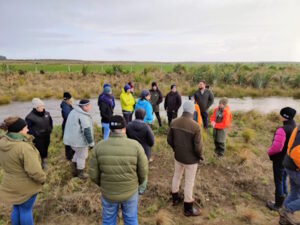
In many areas of work – particularly those involving collaboration, systems change, or place-based initiatives – there’s a growing need for tools that help us reflect, learn, and adapt. Evaluation in these contexts often moves beyond judging performance in fixed ways, instead supporting shared inquiry and progress over time. One tool that’s proving particularly helpful here is the single-point rubric.
Rubrics in practice
Rubrics have long been used to assess quality and performance – especially in education. Increasingly, they are also used in other fields, including evaluation, organisational learning, and programme improvement. At their core, rubrics provide a structured way to assess progress across agreed criteria. They can support participatory approaches, helping groups surface assumptions, clarify expectations, and reflect together.
In evaluation, rubrics are commonly used to bring transparency to how judgments are made. As Allen and Tanner (2006) explain, rubrics provide a clear set of criteria and scaled levels of achievement, making standards explicit and supporting both evaluators and learners in understanding expectations and performance. But how these tools are applied – and the kind of rubrics we choose – can have a big influence on the quality and use of reflection and learning.
Rubrics come in a range of types. Generic, analytic, and holistic formats are commonly used in settings that require consistent, detailed, or summative assessment. These formats are widely applied in education and evaluation, especially where clear judgments or comparisons are needed. Each type has strengths and trade-offs, and choosing the right format depends on the context and purpose. A summary and comparison of these different types is available in an earlier post – Using rubrics to plan and assess complex tasks and behavior – on the Learning for Sustainability website.
An alternative format gaining attention in complex or collaborative settings is the single-point rubric. This approach moves away from fixed grading and focuses instead on encouraging reflection and shared understanding.
Why single-point rubrics work well in complexity
Single-point rubrics offer a different approach. Instead of defining multiple levels for each criterion, they describe just one level – the expected or ‘proficient’ performance. This provides a shared reference point. Alongside this, space is left to note both strengths and areas for growth. This format invites reflection. It asks: what’s working well? What could be strengthened? And where are new or unanticipated contributions emerging? It doesn’t close off discussion with fixed grades but opens it up.
Single-point rubrics can also support a different kind of feedback environment – one that invites reflection without creating a sense of being judged. Because they offer space to acknowledge both strengths and areas for growth, they help participants engage more openly. This format encourages teams and individuals to consider their decisions and actions in a wider context, fostering greater self-awareness and awareness of how their work affects others. In this way, rubrics not only help improve practice, they can also shift how we understand our roles and relationships within a system.
For those working in complexity, this matters. As outlined in a recent post on evaluation in complex settings, evaluators in these contexts often support learning and adaptive management, rather than delivering fixed conclusions. A single-point rubric fits well here. It helps track direction without constraining innovation. It supports constructive feedback without judgement. And it invites people to stay engaged, rather than perform to a scale. This isn’t about compromising rigour; in complex settings, rigour comes through structured reflection, grounded evidence, and purposeful inquiry—not from applying fixed scales.
When and where to use them
Single-point rubrics can be used in a wide range of settings – particularly where the focus is on learning, contribution, and reflection. Examples include:
- Evaluating partnership quality in multi-agency collaborations
- Tracking progress in community-led initiatives or place-based work
- Supporting team reflection on ways of working
- Reviewing practice in adaptive programmes
They can be co-developed with stakeholders, drawing on collective experience and shared values. The criteria should reflect what matters in that context, not just what’s measurable, but what’s meaningful. Rubrics become most useful when they are co-developed. Involving stakeholders in setting the criteria – what ‘good’ looks like – helps surface different perspectives and builds shared ownership. This is especially important in place-based or participatory work, where legitimacy and alignment matter as much as precision.
Importantly, single-point rubrics don’t prescribe a fixed definition of what’s ‘good’. Instead, they offer a reference point or indication, often expressed through prompts or examples. This makes them easier to develop, more adaptable, and particularly suited to contexts where meaning is co-created rather than imposed. In this way, single-point rubrics support a more inclusive and reflective approach, and they can be used in tandem with other tools that do the same.
Co-creating a single-point rubric also invites questions that are often overlooked: What do we value in this work? Whose perspectives are shaping our assessments? How might success look different in different places? In some cases, single-point rubrics may be used alongside more traditional formats. For example, an analytic rubric might be used for financial compliance, while a single-point rubric supports reflection on relational or cultural practice. These layered approaches can balance consistency with responsiveness.
While rubrics are often associated with evaluation, their value in design and development is equally important, especially in complex or collaborative settings. A single-point rubric can be used early on to help clarify shared intent, surface different perspectives on what ‘good’ might look like, and guide programme or partnership design. This makes them particularly well suited to adaptive and place-based work, where programmes evolve over time and need reflective tools that grow with them. In this way, rubrics become not just tools for judging what has happened, but frameworks for shaping what comes next.
Working with rubrics in practice
Rubrics are not just templates to be filled in. Used well, they provide a structure for dialogue and reflection. This means attention needs to go not just into their design, but into how they’re used:
- Co-create the criteria: Involve those who will use the rubric in shaping it. This builds shared understanding and increases relevance.
- Use them iteratively: Apply rubrics at key points to support reflection over time, not just at the end.
- Facilitate dialogue: Create space for people to explain their judgments and reasoning. Use rubrics as a prompt for conversation, not just a scoring tool.
- Document insights: Keep records of reflections and changes. This supports transparency and helps track learning.
Two examples from my work illustrate this in practice.
The Working at place rubric, developed through a national catchment improvement programme in New Zealand, supports agencies and partners in reflecting on what meaningful place-based work looks like. This single-point rubric sets out key criteria for effective engagement and impact, providing prompts and space for teams to discuss their current practices, share examples, and identify opportunities for improvement. It is designed to be used collaboratively, encouraging open dialogue and joint sense-making about progress in complex, place-based initiatives.
Similarly, the Partnerships rubric, developed over a decade of partnership and cross-sector evaluations, helps organisations and collaborators assess and strengthen the quality of their relationships and ways of working together. This tool is structured around dimensions of good partnership practice, each with descriptive prompts and reflection questions. It is intended not as a scoring mechanism, but as a guide for open-ended discussion, inclusive participation, and collective learning. Teams can use it to surface assumptions, celebrate strengths, and identify areas for growth – whether forming new partnerships, reviewing progress at key milestones, or adapting to changing circumstances.
Both tools exemplify how single-point rubrics can move beyond simple assessment, providing a flexible structure that fosters dialogue, builds shared understanding, and supports ongoing learning in complex, collaborative settings.
Closing thoughts
Rubrics can be powerful tools for learning and decision-making. In complex, participatory settings, single-point rubrics offer particular strengths. They support open-ended reflection, collective judgment, and adaptive practice. They help hold a line of purpose while staying responsive to context. None of this is about letting go of independence or rigour. But in complex settings, independence is held differently—it’s not about distance; it’s about perspective. Evaluators and teams working this way stay grounded in purpose, ask questions that surface insight, and help sharpen collective judgement.
The rigour lies in reflection, shared inquiry, and staying close to what matters. A well-used single-point rubric doesn’t deliver verdicts; it invites meaningful sense-making, making space for what’s emerging, and helping teams respond thoughtfully, not reactively. As interest in more relational, systems-oriented ways of working grows, tools like these can help teams reflect, learn, and act together – without needing all the answers in advance.
More resources on rubrics can be found from the main Learning for Sustainability rubrics page –Rubrics – as a learning and assessment tool for project planning and evaluation. More material can also be found from the indicators page. Other related PM&E resources can be found from the Theory of Change and Logic Modelling pages.
More information on my own use of rubrics can be found through recent research papers. One 2016 paper looks at the use of rubrics to support collaboration in an integrated research programme – Bridging disciplines, knowledge systems and cultures in pest management. Another recent book chapter (2018) looks at the Use of Rubrics to Improve Integration and Engagement Between Biosecurity Agencies and Their Key Partners and Stakeholders: A Surveillance Example.
