
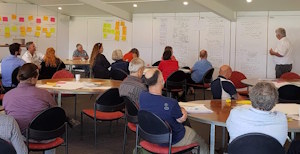
Strategic planning supports groups to make sense of their context, clarify what matters, and decide how best to move forward. It helps organisations shape purposeful action without locking themselves into rigid plans, especially when working in uncertain or shifting environments. Good planning blends clear direction with the flexibility to respond, adjust, and learn over time.
Effective strategy work often combines structured methods with opportunities for open reflection and inquiry. Tools that support environmental scanning, goal setting, or priority development can help groups build a shared picture of where they are and where they want to head. Approaches like STEEP analysis, the Balanced Scorecard, or the FAST framework provide starting points that can be adapted to different settings.
This page curates a selection of practical guides to support planning and direction setting. The resources below offer accessible ways to explore context, develop strategic options, and turn ideas into manageable steps. They are designed to help teams work together with greater clarity and confidence, whether planning within an organisation or across a wider collaborative effort.
Strategic Planning Resources – 501 Commons
501 Commons provides a collection of tools aimed at facilitating well-structured and efficient strategic planning discussions. These resources are particularly useful for organizations seeking to engage stakeholders and ensure a comprehensive planning process.
The Strategic Planning Process in 4 Steps
This resource brief from OnStrategy outlines a four-step approach to strategic planning, emphasizing the importance of defining a bold vision and creating actionable objectives. It guides organizations through determining strategic positions, prioritizing objectives, developing plans, and executing them effectively.
Strategic Planning Resources | AAMC
The Association of American Medical Colleges offers a comprehensive online resource that delves into the strategic planning and implementation process. It covers phases such as assessment, development, implementation, and monitoring, and includes a toolkit designed to enhance strategic planning skills.
Strategic Planning Basics
This guide from the Balanced Scorecard Institute outlines the essential components of strategic planning. It explains how organisations can define their vision, set goals, and develop actionable strategies using structured methodologies like the Balanced Scorecard. The resource covers key planning phases, from environmental scanning to performance measurement, making it a useful starting point for those new to strategic planning.
The TOWS Matrix: Putting a SWOT Analysis into Action
Many organisations use SWOT analysis to identify strengths and weaknesses, but it can be hard to know what to do next. The TOWS matrix helps turn SWOT insights into practical strategies. This guidance from VolunteerHub shows how to generate options from internal and external factors.
With Goals, FAST Beats SMART
Donald and Charles Sull argue that traditional SMART goals can limit agility and collaboration. They propose the FAST framework – Frequently discussed, Ambitious, Specific, and Transparent – to support strategy execution. FAST goals strengthen alignment, encourage cross-team coordination, and keep targets visible, helping organisations respond to change more effectively.
Evaluating external factors
STEEP is an acronym for: Social, Technological, Economical, Environmental and Political. The STEEP structure is used for scanning developments in the external (contextual) macro environment. Other known acronyms derived from STEEP are: PEST, PESTLE, PESTEL, STEP, STEPJE, STEEPLED and LEPEST. The STEEP acronym is well known and used all over the world as a basis for external analysis.
For more background and context, you can start with the Strategic planning and direction setting hub page. Other related resources include the pages on futures, foresight, scenarios and visioning and tools and methodologies for systems thinking, which offer further approaches to support planning in complex environments.