
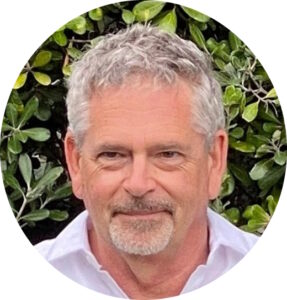
Examples of facilitation, MEL and systems practice that help teams align, act and learn in complex settings.
This portfolio shares selected examples of how I have supported collaboration, evaluation and strategy across adaptation, biodiversity and freshwater. Each example shows practical tools and facilitation approaches that help turn learning into better decisions. You can also learn more about my background, publications, and broader work focus on the main Will Allen page.
Much of my work is anchored in four interlinked domains: climate adaptation, biodiversity and ecosystems, freshwater and catchment management, and food systems/nexus themes. Across these areas I specialise in monitoring, evaluation and learning (MEL) frameworks and indicators that do more than report progress — they support timely, adaptive decisions. This provides a consistent thread through the projects below, alongside my wider emphasis on adaptive management, systems thinking, and participatory practice.
The selected contributions are not a full CV, but they give a sense of the breadth and depth of my experience. Each demonstrates how I work alongside others to build shared understanding, enable collaboration and achieve meaningful outcomes in dynamic and uncertain contexts. The examples span local, national, and international work, and reflect a consistent focus on enabling change in complex systems.
Multi‑actor process design and facilitation
I convene and design collaborative processes that help diverse actors work together constructively, building trust, shared understanding and joint action in complex settings.
- Ararira–LII Catchment Group (2021–2023) – Facilitated a multi-actor project team of farmers, mana whenua, council staff and freshwater specialists to co-design solutions for lowland waterway management. The process supported shared ownership and led to new directions for implementation.
- Cross‑sector partnerships (2010 – 2025) – Supported a range of public, private and community partners to co-design initiatives and develop shared measures of progress, often in early-stage or under-resourced contexts. This kind of work has spanned catchment-level partnerships, national programmes, and international research collaborations.
Monitoring, evaluation and learning (MEL)
I embed reflective and adaptive MEL systems so teams can understand what’s working, adapt with confidence, and demonstrate impact in complex, shifting environments.
- Living Water Evaluation (2014–2024) – Co-led the participatory evaluation of this DOC–Fonterra partnership, focused on improving freshwater ecosystems in working landscapes. We used a Complexity-Aware Monitoring and Evaluation (CAMEL) approach blending systems thinking, adaptive management, and developmental evaluation. The resulting resources – including a national summary, five site reports, and a place-based impact tool – continue to support other teams working in complexity.
- Complexity-aware learning systems (2010-2025) – Over the past 15 years, I’ve supported a wide range of programmes to design and embed MEL approaches grounded in systems thinking and participatory practice. This has included integrating Theory of Change, rubrics, and reflective tools to support real-time learning, strategic adaptation, and the ability to demonstrate value in dynamic, place-based or cross-sector settings.
Strategic planning and direction‑setting
I support groups to set shared direction and adapt strategy in fast‑changing environments, ensuring alignment and clarity in multi‑actor settings.
- Healthier Lives National Science Challenge (2016–2024) – Served on the Governance Group and Kāhui Māori for the Healthier Lives National Science Challenge (2016–2024), one of 11 New Zealand National Science Challenges. This board‑equivalent group set strategic direction and oversaw alignment of investment with community needs.
- International advisory roles – Member of the CGIAR Advisory Panel on Gender, Institutions and Participation (2003–2009), supporting strategy for the global Environment and Water Programme. Also served on the IUCN Collaborative Management Working Group Steering Committee (2000–2008), contributing to international programme design and participatory governance approaches.
- Broader strategic experience – Throughout my career, I’ve supported a wide range of teams, agencies, and community groups with strategic planning, direction-setting, and scenario thinking. This includes facilitating cross-sector alignment, integrating systems perspectives, and helping teams navigate change in locally grounded and adaptive ways.
Ethics and reflective coaching
I support ethical, reflective practice across research and programme settings—helping individuals and teams deepen their capability, integrity, and accountability.
- Ethics frameworks – Led the development of a collaborative peer-review process for ethics reflection in 2006, designed to support applied and kaupapa Māori research. This model has since informed the internal ethics processes of several Crown Research Institutes in Aotearoa New Zealand. It also remains available to independent researchers via my Learning for Sustainability ethics page and this recent ethics-in-practice blog post.
- Coaching and mentoring (2010 – 2025) – Worked alongside practitioners and leaders to strengthen confidence in adaptive management, systems thinking, MEL, and participatory methods – often through reflective coaching grounded in real-world contexts.
Writing and knowledge curation
I make complex ideas accessible and curate practical tools and resources that support learning and influence practice.
- Learning for Sustainability website (2006 – 2026) – It has strong domain authority (Ahrefs DR 46), over 1,400 newsletter subscribers, and is linked to by more than 700 external sites — reflecting its standing as a trusted reference across professional, academic, and policy settings.
- Publications and reports – I’ve co-authored a range of journal papers and book chapters and reviewed reports that translate real-world insights into usable knowledge for strategy, policy, and collaborative practice. Nearly all are freely available online, reflecting my long-standing commitment to open access.
- Sharing knowledge at scale – I regularly share tools, reflections, and writing through professional networks and social media, including LinkedIn (2.5K+ followers), Medium (1.6K followers) and Bluesky (3.9K+ followers), extending the reach and practical value of these resources across professional communities.
Digital tools, AI and web strategy
I support the thoughtful use of AI, internet tools and SEO strategy to strengthen learning, communication, and knowledge mobilisation.
-
AI-assisted writing and research – Coach individuals and teams to use generative AI and advanced internet search strategies to support analysis, synthesis, and communication. My blog post AI as a thought partner: reflections on collaborative practice and systems work shares how I use these tools in real-world systems-facing contexts.
-
Digital strategy for knowledge sharing – Help organisations use SEO, social media, and web publishing to amplify the reach and practical value of their work. My own site, Learning for Sustainability, is one example – an open-access hub of tools and ideas curated to support systems-focused practice. I also maintain a companion AI resource page with tools, ethical guidance, and reflections to support others navigating this space.
Recognition and influence
My work increasingly resonates beyond traditional sectors. In 2024, WhatWorked Education (UK) acknowledged the influence of my systems-focused evaluation and learning frameworks in helping reframe their participatory education reform work:
“Special thanks to Will Allen and Marc Harris, whose reflections on participatory action research helped us reframe this work through the lens of learning cycles, co-created evidence, and systems-level impact.”
– Emma Dobson, COO, WhatWorked Education
This portfolio complements the services and support I can offer to organisations, partnerships and research teams through short, well-aligned pieces of work. If you’re seeking targeted input on collaborative design, evaluation, facilitation, writing or strategic reflection, feel free to get in touch. I’m especially interested in initiatives working at the edge, where relationships, learning and adaptive strategy matter most.