
People working in place-based, multi-actor initiatives do not need convincing that their world is complex. The harder question is how to organise that work in ways that reduce friction, support good decisions, and hold up over time. This reflection looks more closely at programme design, governance, and the conditions that support collaboration over the long haul in place-based initiatives, while acknowledging the recurring challenges that show up across these kinds of endeavours.
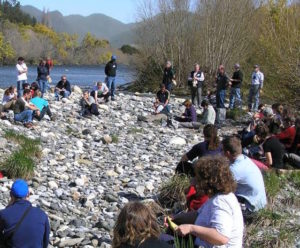
Over the past three decades I have been fortunate to work in three long-term programmes in Aotearoa New Zealand, focused on high country land management (1993–2000), integrated catchment management (2001–2011), and freshwater and biodiversity outcomes (2013–2023). Each brought together multiple organisations and communities around shared landscapes, and each wrestled with familiar tensions around intentions, funding challenges, governance, accountability, and learning.
Those experiences do not stand alone. Reviews of landscape partnerships, climate adaptation programmes, food-system initiatives, and social innovation labs across many countries point to similar challenges. Place-based work needs time, relational depth, and ways of working with people, systems and complexity, yet it is all too often constrained by funding terms, performance regimes, and institutional churn.
Although this reflection is grounded in place-based work, the lessons are fundamentally about supporting collaboration over time – how people organise, learn, govern, and adapt together in complex, multi-actor settings. Across many initiatives, certain patterns keep appearing when the work finds its footing. These patterns are not tied to any one method or framework.
This reflective post draws out eight lessons that emerge from recognising those recurring patterns in long-term, place-based work that depends upon collaboration. They are not offered as a framework to adopt or a checklist to apply. Rather, they provide grounded guidance for practice that sits underneath many different approaches, from ICM and adaptive management through to co-design, evaluation, and complexity-aware MEL.
These lessons are offered for those designing, leading, funding, or evaluating place-based, multi-actor work. The aim is simple: to offer a small set of touchpoints that help people make sense of what they are experiencing, design and re-design programmes, find shared language across roles, and reset expectations about pace and support. It is a longer post than usual because it tries to bring those strands together in one place for people working in these roles.
- Plan for collaboration to grow over years, not months
- Build in ways to revisit purpose, not just agree it once
- Design learning with structure, rhythm, and resourcing
- Surface relationships and power as part of the work
- Use systems and complexity thinking to guide decision-making
- Co-produce evidence to be practical, credible, and usable
- Shape institutional settings to support adaptation
- Support the people and practices that hold institutional memory
Recognising the recurring patterns that sit underneath these eight lessons is useful for a number of reasons.
- They guide design and re-design in simple, practical ways.
These lessons act as a small set of touchpoints. They help programme leads and funders check whether the essentials are in place, such as time for start-up, ways to revisit purpose, visible learning roles, attention to power, systems and complexity tools linked to decisions, and care for institutional memory. This keeps attention on a few leverage points rather than chasing new frameworks. - They help people make sense of what they are experiencing.
Many of the difficulties in place-based work are not signs of poor performance. They arise because the work is long-haul, relational, and shaped by shifting mandates and expectations. Naming these patterns gives teams a shared way to distinguish the challenges that come with the territory from those that can be improved through better design or governance. - They offer shared language across different methods and roles.
Teams will use different tools and labels, depending on their background and context. By framing these lessons as grounded in patterns (rather than as another model to adopt), people can bring their preferred methods into a shared conversation. The focus stays on practice, not on which framework is “right”. - They reset expectations about pace and support.
Long-term, place-based work moves through phases. It needs investment in relationships, learning, adaptation, and memory. These are not soft extras. They are the conditions that enable progress over time. Naming these lessons helps programme leads explain this to sponsors and governance groups in plain terms.
Many people involved in this kind of work will recognise these lessons from their own experience. They have lived the slow early years, managed purpose drift, worked around rigid performance systems, and watched institutional memory leave when staff move on. What recent reviews mostly offer is a language that helps name these patterns more clearly, and to see them as features of complex, multi-actor settings rather than signs of individual weakness. This way of looking at long-term collaboration also aligns with current thinking on resilience, where capability, relationships, and learning are understood as central to living with ongoing change.
The language here is deliberately method-neutral. Many frameworks and approaches speak to this territory – systems thinking, complexity-aware practice, adaptive management, co-design, developmental evaluation, and more. Each brings useful tools and insights. Thinking in terms of patterns helps keep attention on what people actually need to do – how they hold purpose, learn, attend to relationships and power, work with evidence, and support institutional memory – rather than on which framework is currently in fashion.
With that context in mind, each lesson is explored below, drawing on programme experience and wider research.
1. Plan for collaboration to grow over years, not months
In all three long-term programmes, the first years were spent clarifying purpose, building trust, and working out how decisions would be made. The visible outcomes that people now point to emerged later. That pattern is echoed across the literature on adaptive governance and landscape partnerships, which notes that early phases are dominated by relationship building, governance design, and framing the work, with “impact” coming through once those foundations are in place.
It is also rarely a smooth curve. Progress often comes in bursts, linked to windows of political opportunity, funding changes, or local crises that move issues up the agenda. Periods of consolidation can be followed by sudden shifts in direction when leadership or policy priorities change. For programme leads, this means treating the early years as an investment phase – building the relationships, governance, and shared understanding that later activity and impact will depend on.
The practical challenge is clear but demanding. Design and funding need to reflect this multi-phase trajectory. Programmes benefit from recognising at least four distinct phases: start-up, consolidation, scaling and deepening, and transition or exit. Each phase has different needs for staffing, governance, evidence, and engagement. When funding models treat complex, place-based work as a short project rather than a long journey, they tend to reward early “activity” at the expense of the quieter relationship and framing work that makes later impact possible. For more links to guides on long-term collaboration across catchments, regions and communities you can visit the Place-based and landscape approaches resources page.
2. Build in ways to revisit purpose, not just agree it once
Successful partnerships almost always begin with some shared direction. Partners need a reason to work together that fits with their core business, values, and accountabilities. Early work on joint aims, scope, and ways of working makes that explicit and gives people a chance to understand each other’s values, aspirations, and expectations.
In long-running programmes, though, purpose does not sit still. New partners join, others leave, policies shift, and local priorities change. Over ten years, a programme might move from early problem recognition, through experimentation, into implementation, and then into questions about legacy and transition. Without deliberate effort, the original purpose gets stretched and diluted, sometimes in useful ways, sometimes not.
Across place-based and collaborative initiatives, the same pattern appears. “Purpose drift” is common when there are many actors and shifting political signals. Where programmes fare better, they treat revisiting purpose as core governance work. They create structured moments to pause and renegotiate direction: regular reviews, pathway updates, or public value conversations with partners and communities.
In practice, these conversations often matter as much for how trade-offs are handled as for the goals themselves. Different partners may legitimately hold overlapping but distinct purposes. Naming those differences, clarifying shared intent, and agreeing how to handle tensions is part of the work. The practical lesson is that purpose needs a regular rhythm of attention, not just a launch workshop. When boards, co-governance groups, or steering groups make time to revisit purpose, it becomes easier to adjust course without every change feeling like a crisis or a defeat.
3. Design learning with structure, rhythm, and resourcing
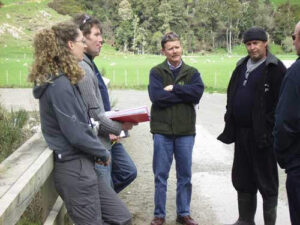
Across the long-term programmes, the learning that mattered most came from regular chances to compare expectations with experience, to listen to different perspectives, and to sit with what had surprised people. Those conversations happened in organised settings and in informal moments. A drive back from a field visit or a quick chat after a meeting could be enough to help people notice patterns, question assumptions, and adjust what they were doing together.
Learning showed up less as a product and more as a recurring practice of review, reflection, and shared sense-making. Monitoring and evaluation can support this when they are designed as part of that learning system rather than as external judgement. The most useful efforts provided light structures for asking good questions, bringing evidence and experience into the same room, and feeding insights into real decisions, instead of producing thick reports that few people used. These could be after-action reviews or learning debriefs.
Reviews across landscapes, health, food, and social innovation work point in the same direction. Learning tends to stick when it is supported by clear roles and simple artefacts that feed into regular management and governance discussions. Recent work also emphasises equity in learning. Whose questions shape the agenda? Whose knowledge is recognised? Who has time to take part? If only agency staff and consultants can afford the time, community or Indigenous partners risk having their experience reported about them rather than used to shape the work.
The lesson here is that learning is infrastructural. It needs time in calendars, a line in budgets, and named responsibilities. It also needs to be woven into existing governance and management cycles, so that data and reflection are part of how decisions are made, not a parallel activity.
4. Surface relationships and power as part of the work
It is easy to say that “relationships matter”. In practice, the quality of relationships, and the way power is exercised within them, often sets the ceiling on what a programme can achieve. Much of this plays out in informal conversations as much as in formal meetings.
In long-term programmes, progress often depends on people who act as boundary spanners. They move between agencies and communities, reframe problems, translate language, and hold informal trust. Where those roles are recognised and supported, collaboration can deepen. Where they are taken for granted, or where people burn out, programmes stall.
The wider literature on multi-actor and co-governance work reinforces this. Informal leadership, brokerage, and boundary-spanning roles are repeatedly identified as critical. At the same time, there is growing attention to power asymmetries and “inclusion traps”, where participation is broad on paper but influence remains concentrated in a few institutions. Community partners and Indigenous organisations are often asked to show up repeatedly without matched investment in their capacity and autonomy.
The lesson is not that every meeting needs to become a seminar on power. It is that programmes need to pay sustained attention to questions such as: Who convenes? Who sets the agenda? Who carries risk? Who has veto power? Whose time is resourced, and whose is volunteered? Useful related tools and frameworks are gathered here on the facilitating guides and frameworks resource page.
These questions may feel uncomfortable to raise, especially when relationships are still forming or under strain. Yet without that honesty, trust erodes quietly. Over time, it can be as important to invest in governance and partnership design as in technical work, so that authority, responsibility, and benefit-sharing are aligned with the values the programme claims to hold.
5. Use systems and complexity thinking to guide decision-making

Across long-term programmes, systems thinking has been useful, but only as one part of how people make sense of their work. Systems thinking tools such as rich pictures, causal loops, and timelines do not “solve” anything on their own. They help people see patterns, surface assumptions, and notice that the same landscape can hold many different stories, purposes, and relationships. Used that way, they support conversations about choices rather than collapsing everything into a single, neat picture. That diversity of views is part of the work. When a single diagram is treated as the situation under question, systems thinking becomes a rigid template rather than a wider way of seeing.
This is where a complexity-aware stance matters. It is easy to think that producing a systems map means you have “sorted” the complexity. In practice, systems tools give structure, but complexity-aware thinking keeps people attentive to change, feedback, and the limits of what can be anticipated. Real-world collaboration needs both. Structure helps teams orient themselves and act together; a complexity-aware stance helps them stay open to emergence and adjust as the work unfolds.
Experience from climate adaptation, multifunctional landscapes, and transition initiatives points the same way. The practical lesson is simple: use systems tools sparingly and at moments when they can feed into real choices. Keep them local and maintainable, and hold them within a wider, complexity-aware approach that treats structure as support for shared sense-making, not as a claim to certainty.
6. Co-produce evidence to be practical, credible, and usable
Across long-term, multi-actor programmes, one of the consistent tensions lies in how evidence is produced and used. On the one hand, funders and central agencies often require standard indicators and reporting formats. On the other, local partners and Indigenous communities want information that speaks to their realities and helps them make decisions in context. When those needs are not brought together, evidence risks becoming something people report upwards rather than something they use together.
In the programmes I have worked with, the most useful evidence products were those that were co-designed with intended users: joint stories of change, simple scorecards, or navigation aids that brought together monitoring data, modelling, and local knowledge. These could be used both for internal learning and for external accountability.
Reviews of monitoring, evaluation, and learning in complex programmes highlight similar points. Evidence is most likely to be used when it is timely, decision-focused, and co-produced. But evidence work also carries politics. Different actors value different kinds of knowledge, and evidence systems can unintentionally reinforce existing power imbalances if local, Indigenous, or practitioner knowledge is treated as anecdotal while quantitative measures are taken as objective.
The lesson here is twofold. First, programmes benefit from negotiating credibility standards up front. What will count as good enough evidence for different decisions and for different partners? Second, co-production matters. When those who will use the evidence are involved in shaping the questions, methods, and formats, the resulting products are far more likely to influence practice.
7. Shape institutional settings to support adaptation
Even the most thoughtful programme design can be undermined by budgeting rules, performance frameworks, and organisational risk cultures that leave little room for adaptation. Long-term programmes often must navigate tensions between short-term output targets and longer-term systemic outcomes, as well as work around fragmented mandates across agencies.
The wider literature on place-based policy and adaptive governance is clear on this point. Budgets, audits, and performance indicators do not just sit in the background; they actively shape what kinds of experimentation are possible, how failure is treated, and whether learning is rewarded or punished. Well-intentioned risk controls and accountability measures, if not adjusted for complexity, can end up suppressing innovation.
What seems to help is explicit design of “safe-to-adapt” spaces. This can include portfolio approaches where some resources are reserved for experimentation, learning targets alongside output targets, and performance expectations that include responsiveness to new information rather than only adherence to fixed plans. It also means paying attention to mandate design. If a programme is tasked with transformative outcomes but managed through transactional contracts, it is being set up for frustration.
From a practitioner perspective, part of the work is translating these insights into conversations with funders and senior leaders. From a governance perspective, it is about being willing to adjust rules and expectations so that they align with the nature of the work, not just with inherited templates.
8. Support the people and practices that hold institutional memory

Finally, long-term programmes live or die by what happens when people move on. In each of the three programmes that anchor this reflection, staff turnover and leadership change created moments of real vulnerability. Knowledge walked out the door; relationships had to be rebuilt; and hard-won insights were lost.
Studies across landscape, catchment, health, and food-system initiatives point to the same challenge. Institutional memory is often person-based, and while document repositories and data systems help, they are not enough. Memory also resides in stories, norms, and networks. Without some deliberate care, the people who hold that memory can find themselves under-supported, carrying history in ways that are invisible until they leave.
Programmes that fare better treat institutional memory as something that needs active care. They invest in shared narratives, co-authored reports, and joint presentations. They support communities of practice and alumni networks that keep people connected beyond formal roles. They plan for transitions, so that when contracts end or teams are restructured, knowledge and relationships have somewhere to go. Sometimes this includes simple practices such as structured handovers, induction sessions built around stories, or pairing newer staff with people who have been part of the work for longer.
The practical lesson is to think about memory from the outset. Who will carry the story of this work when the current team is gone? How will new people be oriented? What needs to be written down, and what needs to be shared through conversation and continued connection? These are strategic questions, not filing questions.
Bringing the lessons together
Taken together, these eight lessons point to a view of place-based, multi-actor work that is as much about governance, learning, and relationships as it is about technical fixes. They suggest that when people talk about “complexity-aware” approaches, they are often describing the practical work of holding these dimensions together over many years.
These lessons do not replace familiar disciplines and project activities. They stretch them over a longer arc. Place-based work still moves through initiation, planning, delivery, and handover, but what matters is how these phases are approached. Tools such as risk registers, work programmes, and reporting templates can make space for relationships, learning, and adaptation, or they can quietly squeeze them out.
Many of the people doing this work already know these lessons; naming them simply makes that knowledge more shareable and easier to act on. In that sense, these lessons sit alongside good project practice rather than in competition with it. They offer a way to connect day-to-day management disciplines with the longer-term, systemic nature of place-based work.
The questions that follow from them are simple to ask and easy to overlook. Are we giving this collaboration enough time? How are we revisiting purpose? What supports learning here? Where is power sitting? How are we using systems tools? Whose evidence counts? Do our governance settings match the work? And who will carry the memory of what has been learned?
Questions like these, returned to steadily over time, may matter as much as any specific method we choose.
Working with place over time is one part of a wider practice across multi-actor settings. If you want to explore related tools and reflections, the multi-actor processes hub gathers guides on place-based and landscape approaches, cross-sector partnerships design, and social learning. A related reflection explores seven foundational patterns for working well in complexity on a day-to-day basis. These pages offer practical entry points that sit alongside the lessons outlined here and can help teams shape their own ways of working.
If you’re working in a similar space and would like support with facilitation, MEL, or process design, you’re welcome to get in touch. I’m particularly open to short, well-defined advisory, writing, or reflection support, and am always happy to talk through what might be useful.
[*1 Images: Motueka-ICM]
[*2 Image: Studio Romantic / Adobe Stock]
[*3 Image: Engin Akyurt from Pixabay]

One Response
Great post Will and really speaks to the importance of relationships and building as you go.
Our little nonprofit Treecreate Studio is always looking to build our advisory group.
Would love to catch up.