
Many climate adaptation and systems-change initiatives, including those focused on biodiversity, water, food, and health, struggle because collaboration and learning are not explicitly designed or resourced to hold the work together over time. In a polycrisis, where multiple crises interact and compound, this really matters. This post argues that collaboration and learning should be treated as core social and institutional infrastructure, and explores what that means for programme design, governance, and everyday practice. It focuses on the often invisible layer of work that helps multi-actor initiatives stay aligned, keep learning, and adjust together over time.
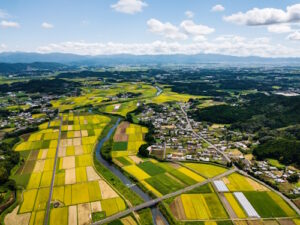
In many places, it already feels as if we are working inside overlapping crises rather than dealing with one challenge at a time. Climate impacts collide with housing and cost-of-living pressures, public health shocks, geopolitical instability, and contested politics. What once looked like separate problems now interact and amplify each other, creating more volatility, more surprises, and sharper consequences when things go wrong.
There is now widespread recognition that these challenges are interconnected. Across biodiversity, climate, water, food, and health, the case for integrated and systemic responses is well established. This builds directly on earlier reflections here on breaking silos, which focused on why systemic change is necessary. This post picks up where that earlier one leaves off, by looking at what is often missing in practice: the collaboration and learning infrastructure needed to hold that integration together over time.
This gap shows up particularly clearly in practice in climate adaptation and adaptive management. In principle, these fields already emphasise learning, adjustment, and coordination over time. In practice, the problem is rarely a lack of intent or understanding.
For those working in climate, adaptation, and systems change, this polycrisis context changes the nature of the job. It becomes harder to plan in straight lines, to rely on stable mandates, or to assume that a single strategy will hold for long. The cost of not adapting how we work together shows up quickly: fragmented responses, communities left exposed, exhausted partnerships, and promising initiatives that stall when the next shock hits.
What we need is the social and institutional infrastructure that makes collaboration and learning possible over time, so institutions and communities can adjust together rather than being knocked off course by each new shock. I use the term social and institutional infrastructure to emphasise that what holds adaptation and systems-change work together is not only physical assets, but also the relationships, norms, and institutional arrangements that enable people to act and learn together over time.
Analysis is no longer the main constraint
Across climate, biodiversity, and wider systems change work, most serious forums and strategies are now rich in scientific analysis and policy proposals. Even where the interconnected nature of these challenges is widely recognised, responses still tend to be organised sector by sector with integration treated as a coordination task rather than as something that needs its own design and resourcing.
What is harder, and increasingly limiting, is what happens after the analysis. Many of us have sat in rooms where the slides are excellent and the strategy is sound, yet everyone leaves quietly wondering who will actually hold this work together once the workshop is over. Who will keep people aligned when priorities shift, when staff change, when the political or funding context tightens, or when the emotional weight of the work begins to bite?
Increasingly, the constraint is not insight, but whether people and institutions are set up to keep working with that insight together over time.
In long-running, complex initiatives, the same failure modes appear again and again. Momentum is strong immediately after a strategy or workshop, but fades once initial funding or leadership attention moves on.
These are not mainly failures of intent or intelligence. They are failures of how collective work is designed and supported over time, across cycles of work. Good people, good ideas, and strong evidence are present. What is missing is often the everyday structure that allows collective effort to survive churn, disagreement, and fatigue.
The double gap: inner capacity and collective design
In practice, two gaps keep showing up: a gap in inner capacity, and a gap in the way collective work is designed. There is growing attention on the inner capacities people need to work in complex, confronting contexts. This includes the ability to stay in difficult conversations, hold uncertainty, work across power, culture, and institutional boundaries, and manage fear, frustration, and grief without closing down. This work matters, and many people are not well supported to develop or sustain these capacities.
However, these inner capacities are not substitutes for good institutional design, and they are difficult to sustain without it. Even when people do have these qualities, the way the work is set up often makes them hard to use. Everyday routines and institutional expectations can actively work against them. People are asked to stay constructive while mandates and accountability systems pull in different directions, to move quickly to decisions when shared understanding is still fragile, and to protect organisational turf rather than contribute to collective outcomes.
Inner development initiatives can help. But without changes to everyday ways of working, people are still swimming against the current. This creates a double gap: in individual capacity, and in collective design. Under sustained disruption, demands on people’s inner stability increase just as institutional continuity becomes more fragile. Addressing only one leaves the other as a limiting factor.
The missing collaboration and learning infrastructure
Between individual capacity and formal policy or governance sits a largely invisible layer of work. Most complex programmes are not co-designed with the collaboration and learning infrastructure needed to hold alignment, learning, and relationships over time. This is not just a conceptual problem. It shows up in very practical questions that many programme leaders and facilitators will recognise.

This is where ideas from complexity-aware monitoring, evaluation and learning (CAMEL) and adaptive management either become usable or remain aspirational. Both emphasise feedback, shared interpretation, and adjustment over time. Without infrastructure that supports these functions in everyday work, learning struggles to influence decisions and adaptation remains something people talk about rather than do.
In practice, this raises simple but persistent questions. Who keeps people around the table through leadership and funding changes? Who carries learning across projects and time, rather than letting it disappear when staff move on? Who notices and addresses partnership strain before it becomes fragmentation? In most programmes, these functions are assumed, left implicit, or carried informally by a few committed people.
Deliberately designing for this layer means planning for continuity beyond single events and building shared sense-making into everyday work. It involves creating regular rhythms for reflection and adjustment, and sharing coordination and relational load rather than leaving it with one or two people. This is not about individual capability or one-off facilitation, but about ongoing design and resourcing choices.
Not just facilitation, evaluation, or a new discipline
There are important overlaps with facilitation and evaluation. Facilitation supports good conversations and decision processes, while evaluation supports learning, reflection, and accountability. An earlier post here described facilitation as a whole-of-process practice across the life of an initiative. The issue in many programmes, however, is that no one role is explicitly responsible for holding continuity, relational health, and collective learning over time. The answer is not a new discipline, but making this work an explicit design and resourcing expectation.
This post focuses on whether that capacity is built into programmes and institutions as a routine expectation, rather than relying on particular individuals or short-term contracts. It is rarely anyone’s explicit job to notice when a cross-agency group is losing momentum, or to renegotiate how collaboration needs to change as mandates, people, or pressures shift. As a result, this work is carried informally – if at all – and is highly vulnerable to staff turnover and overload.
Some practitioners and organisations are already designing for this layer of work, even if they do not always name it as such. Co-design, systemic design, and locally led adaptation initiatives show what is possible when collaboration and learning are treated as things you intentionally build capability for. For now these are still the exception. Too much still depends on particular people who happen to ‘get’ this work, rather than on shared institutional expectations and resourcing.
What this looks like as institutional and co-design choices
In earlier posts on co-design in complex settings, I’ve argued that co-design is not just about running good workshops or using participatory tools. It is about shaping how people continue to work, decide, and learn together over time. The argument here extends that logic to the institutional level: treating collaboration and learning as things you intentionally design and resource, not something you hope will emerge once the strategy or process is complete.
When collaboration and learning are treated as design responsibilities, they show up in very practical choices. Programmes explicitly name responsibility for holding work across cycles of activity, not just for delivering projects or producing reports. Budgets protect space for coordination, reflection, and learning, not only for visible outputs. Even a modest proportion of programme funding reserved for these functions can make a material difference.
Learning is built into governance and programme routines through regular, light-touch reflection, with clear responsibility for follow-up so it does not become a ritual. Relationship strain is treated as a governance issue rather than a personal failure, made discussable through simple, periodic health checks and facilitated conversations when needed. The work of holding alignment and follow-through is shared across small cross-organisation core teams, rather than resting on one or two individuals.
Until these elements are deliberately designed and resourced, they remain invisible, fragile, and vulnerable to staff turnover and burnout.
When you look at your own programme or partnership, it can help to make these design choices explicit and discussable. Some simple questions include:
- Whose explicit job is it to hold work across cycles of activity, not just to deliver projects or reports?
- Where in the budget are coordination, reflection, and learning explicitly protected, rather than treated as overhead?
- What regular, light-touch routines help people make sense of change together, with clear responsibility for follow-up so this does not become a ritual?
- How is relationship strain noticed early and treated as a governance issue, with safe ways to raise concerns and adjust how people are working together?
Bringing questions like these into the design and review of programmes helps make collaboration and learning a shared responsibility, rather than something a few committed people carry quietly in the background.
Why this matters now
Polycrisis conditions multiply the number of shocks and surprises programmes must absorb. Each disruption creates new alignment work: revisiting priorities, rebuilding trust, and making sense of changing evidence. Without collaboration and learning infrastructure, every shock throws groups back to the beginning. The same conversations are repeated, misunderstandings re-emerge, and the same people carry the relational load until they cannot.
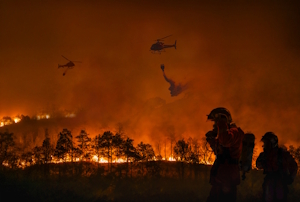
In many settings, technical and operational resourcing are real constraints. As climate impacts accelerate and compound, gaps in data, modelling, monitoring, and hazard assessment, and day-to-day capacity matter, and under-resourcing them has consequences. Where essential technical work has not been done, no amount of collaboration or learning infrastructure can substitute for it. At the same time, even when technical work is sound, operational progress depends on whether there is enough continuity, relational capacity, and shared learning to carry that work through leadership changes, political shifts, and conflict. Without that pairing, even well-designed strategies tend to fragment over time.
When technical work is paired with supportive social and institutional infrastructure, immediate constraints are less likely to cascade, enabling adaptive management to continue over time. It then becomes less about having plans that can change, and more about having the relationships, routines, and decision processes that allow organisations to adjust course together over time. Even without headline crises, the churn of staff, restructures, and policy shifts has a similar effect. This is not primarily about finding better individuals. It is about whether programmes, partnerships, and institutions are designed to make collective work possible under sustained pressure.
A useful starting question for any programme or partnership is simple: what collaboration and learning infrastructure have we actually designed for, and what are we quietly hoping will take care of itself?
If the answer is “very little”, that is not a personal failing. It is a design opportunity.
If this reflection resonates, some of the related posts and resource pages linked above, particularly those on complexity, co-design, facilitation, and learning in practice, may be useful next steps. And if you’re working in a similar space and would like to talk through questions it raises, you’re very welcome to get in touch. I’m always happy to have a short, exploratory conversation about what might be useful.
[*1 Image: TM | Adobe]
[*2 Image: alphaspirit | DepositPhotos]
[*3 Image: Toa55 | iStock]
