
The latest IPBES Nexus and Transformative Change reports reinforce what many already know: the world’s biggest challenges—biodiversity loss, climate change, food and water insecurity, and health crises—are interconnected. Yet, all too often, our policy responses remain fragmented, failing to address these interdependencies. This post explores the findings of these landmark reports, highlighting why systemic change is needed and how systems thinking, systemic design, and adaptive management offer practical pathways forward.
These two new reports from the Intergovernmental Science-Policy Platform on Biodiversity and Ecosystem Services (IPBES) make it clear that piecemeal approaches to biodiversity, climate, water, food, and health crises will not be enough. Instead, fundamental shifts in governance, economic systems, and societal values are necessary to create a just and sustainable future. [Note: Clicking on the report graphics below will take you directly to the policy summaries for more details.]
The IPBES Transformative Change Assessment argues that our current policies aim to reform rather than fundamentally transform systems. As a result, biodiversity continues to decline, ecosystems are being degraded, and tipping points—such as Amazon dieback and coral reef collapse—are getting closer. Meanwhile, the IPBES Nexus Assessment highlights the deep interconnections between biodiversity, food, water, climate, and health, showing that failing to act systemically leads to unintended consequences and missed opportunities for co-benefits.
Why incremental change isn’t enough
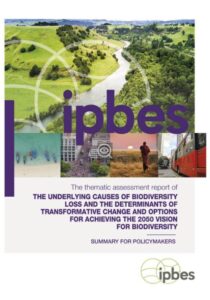
According to the Transformative Change Assessment, most conservation and sustainability policies focus on surface-level solutions without addressing the root causes of biodiversity loss. Three major systemic drivers are identified:
- Disconnection from nature and dominance over ecosystems – The prevailing economic and governance systems treat nature as separate from human well-being, rather than recognising interdependence.
- Economic and governance structures that prioritise short-term gains – Current financial and regulatory systems incentivise the depletion of natural resources for short-term economic returns.
- Power imbalances that reinforce environmental and social injustice – Wealth and decision-making power are concentrated in ways that disproportionately harm vulnerable communities while benefiting those with economic and political influence.
The report argues that transformative change must go beyond incremental improvements. It requires shifts in governance, economic incentives, and cultural values, integrating equity, pluralism, and adaptive learning into decision-making. Achieving this means embedding environmental justice in policy frameworks, fostering institutional change that supports long-term sustainability, and embracing knowledge systems—including Indigenous and local knowledge—that challenge dominant exploitative paradigms. Transformative change is not just about conservation; it’s about reconfiguring power dynamics, economic priorities, and social structures to create a world where people and nature thrive together.
Why integrated solutions matter
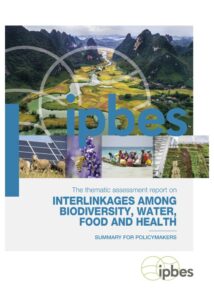
The Nexus Assessment builds on this by demonstrating that biodiversity loss, food insecurity, water scarcity, climate change, and health risks are inextricably linked. Addressing one without considering the others often leads to unintended consequences:
- Industrial agriculture increases food supply but depletes soil health, pollutes water, and exacerbates climate change.
- Water-intensive energy solutions can worsen water scarcity and biodiversity decline.
- Health challenges such as vector-borne diseases are intensified by environmental degradation and climate change.
The report finds that fragmented governance and sectoral silos prevent meaningful progress. Addressing these challenges requires breaking down barriers between environmental, economic, and social policy arenas. Policies must prioritise integrated, cross-sectoral approaches that consider long-term sustainability and resilience rather than short-term economic gains. Strengthening institutional coordination and fostering participatory decision-making—especially with Indigenous and local communities—can lead to more effective, equitable, and sustainable outcomes.
Designing better solutions
The findings of both reports reinforce the need for systems thinking, systemic design, and adaptive management—three interconnected approaches that can help break down silos and support more integrated, effective action.
- Systems thinking shifts the focus from isolated problems to interconnected challenges, helping policymakers and practitioners recognise how interventions in one area influence others. By identifying feedback loops and leverage points, it supports more strategic decision-making.
- Systemic design brings diverse perspectives together to co-create solutions that work across sectors. It recognises that technical fixes alone aren’t enough—collaborative processes and social innovation are needed to shift underlying structures and behaviours.
- Adaptive management allows for learning and course correction. In a fast-changing world, governance and management systems must be flexible, using iteration and feedback to refine strategies in response to real-world conditions.
Understanding and applying these three approaches reshapes how we tackle sustainability challenges. Instead of fragmented, short-term interventions, they foster more integrated and adaptive responses. They encourage collaboration, continuous learning, and flexibility. By navigating complexity in this way, stakeholders can create solutions that lead to lasting change.
Linking these insights to practical action
The reports provide a timely reminder that addressing these challenges in isolation won’t work. They call for governments, businesses, and communities to rethink governance, economic incentives, and planning processes—shifting from reactive policies to more integrated, forward-thinking approaches.
- Governments must integrate biodiversity, climate, water, and food policies to prevent contradictions and inefficiencies. Too often, subsidies and regulations work at cross-purposes, reinforcing the very problems they aim to solve. Policy coherence and long-term investment in resilience are key.
- Businesses need to move beyond short-term profit motives and account for environmental costs. Investing in regenerative models and nature-positive strategies isn’t just an ethical decision—it’s increasingly a financial necessity.
- Local communities and Indigenous groups bring deep knowledge of sustainable land and resource management. Genuine participation—not just consultation—ensures solutions are grounded in lived experience and long-term stewardship.
- Individuals may not drive large-scale policy change alone, but collective action matters. Advocating for better policies, supporting sustainable businesses, and engaging in community initiatives all contribute to shifting the broader system.
The IPBES reports reinforce the urgency of moving beyond isolated fixes. They highlight both the risks of inaction and the possibilities for transformation. The challenge is significant, but the pathways are there—if we choose to take them. Rather than treating biodiversity, food, water, climate, and health as competing priorities, we need to recognise them as interconnected elements of a resilient and thriving future.
If you’ve found this topic helpful, consider sharing it with others who might benefit too. You can also sign up for occasional site updates to hear about new tools, guides, and key resources.
