
This post explores how collaborations can move beyond information sharing to support shared learning and adaptation in complex environmental work. It looks at why collaboration needs more than coordination, what learning-supportive environments look like in practice, the roles that facilitators can play, and how these learning processes connect with evaluation and improvement.
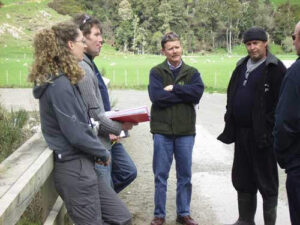
Environmental and place-based initiatives in complex, multi-actor settings often bring together agencies, Indigenous communities, community groups, businesses and sector organisations, researchers, landholders, and others who care about the same places but from different roles and forms of knowledge. In these situations, progress depends not only on plans and technical information, but on how people make sense of change together and learn their way forward. The task is less about finding a single right answer than about creating the conditions where groups can notice change, respond to uncertainty, and adapt over time.
This applies across many kinds of environmental and place-based collaboration, including catchment initiatives, partnership programmes, citizen science projects, and shared monitoring efforts where communities and agencies contribute knowledge together. For practitioners involved in this work, the questions are often practical rather than theoretical. How do we create the conditions where people can share what they are noticing, work through uncertainty together, and adjust their actions as new insights emerge?
Those involved in these collaborations often describe spending a lot of time exchanging updates and coordinating tasks, while having fewer opportunities to step back and make sense of what the information actually means for their work.
Why shared learning matters
Many collaborative environmental initiatives begin with practical needs such as aligning effort, coordinating projects, or meeting regulatory requirements. That matters, but it can narrow collaboration to questions of who is doing what, where, and when. In complex settings these coordination tasks often sit on top of deeper uncertainties about what is happening, what is working, and what a fair and sustainable pathway might look like.
In these situations collaboration needs to do more than line up activities. It needs to help people develop shared understandings, test ideas together, and build enough trust to change course when needed. This means creating space where different forms of knowledge can be brought into conversation, including technical and regulatory knowledge, local experience, Indigenous perspectives, and practitioner insight.
In many programmes a great deal of effort goes into producing and sharing information. Reports are written, monitoring data are summarised, consultants present findings, and workshops are held. None of this is wrong, but information on its own rarely shifts practice. Without opportunities to work with the information together, it can circulate across a collaboration without becoming shared insight.
What is often missing is time for joint sense-making. Groups need opportunities to ask what the information means in their context, how it connects with what people are observing on the ground, and what it suggests for current plans and priorities. The point is not simply to collect more information, but to understand the conditions that help people notice, interpret, and respond together.
When collaborations create space for this kind of shared reflection, the focus shifts from delivering reports to enabling better conversations. Questions such as “What are we noticing?”, “What is surprising us?”, and “What might we need to adjust?” become as important as “What have we done?”. It is often through these conversations that collaboration moves beyond coordination and begins to support adaptation.
What learning environments look like in practice
If we take shared learning seriously, then part of collaboration involves shaping environments where it can happen. In practice, learning-supportive environments are usually quite ordinary. They often take the form of regular spaces where people can pause and reflect on recent actions, rather than only planning the next set of tasks. They offer enough predictability that people know there will be opportunities to revisit decisions and track what has changed, rather than feeling that every meeting must settle everything.
These environments also pay attention to how safe it feels to speak up. People are more likely to share uncertainties, raise concerns, or acknowledge when something has not worked if they feel confident they will be listened to respectfully. Creating learning-supportive environments also means recognising differences in influence and resources so that groups with less formal power can contribute meaningfully to shared learning and decision-making. These issues are discussed further on the Learning for Sustainability page on capacity building, social capital, and empowerment.
Another feature is that action and reflection remain connected. Groups do not only discuss ideas in the abstract. They identify small changes they can try, then return to see what happened and what can be learned from the experience. Over time this creates a rhythm of experimenting, noticing, and adjusting that helps collaborations remain responsive in complex conditions.
What facilitators actually do
In these settings, facilitation is less about keeping meetings tidy and more about supporting ongoing learning. One way to describe this work is through four broad roles: convene, frame, connect, and reflect.
To convene is to bring the right people together in the right ways. That includes thinking about who needs to be in the room for particular conversations, how to involve those who cannot attend, and how to ensure Indigenous communities, local groups, and other less-resourced partners are not treated as an afterthought. It also means paying attention to timing, accessibility, and the small hosting details that signal that all participants are valued.
To frame is to focus attention on the questions that matter and to clarify what kind of conversation is taking place. Is this a meeting to share updates, explore options, test an emerging direction, or decide on a specific commitment? Clear framing helps participants understand what is being asked of them and creates space for learning by making exploratory and reflective conversations legitimate alongside formal decision-making.
To connect is to link people and ideas over time. Facilitators notice patterns across meetings and sites, bring related issues together, and help participants see how their concerns intersect. They may draw on monitoring, local observations, and past decisions to show how different pieces fit together without closing down debate. This connective work also involves linking different forms of knowledge, so that technical analyses, local experience, and Indigenous perspectives can inform one another rather than sit in separate silos.
To reflect is to hold open space for groups to look back and consider what they are learning. Facilitators can introduce simple prompts and processes that invite people to notice shifts in relationships, understanding, or practice alongside progress on tasks. They can help surface assumptions, name tensions, and ask what the group might do differently next time. In this way, facilitation contributes directly to the adaptive capacity of the collaboration.
A few starting points for practice
People involved in collaborative environmental work often ask what small shifts might help move conversations from updates towards shared learning. A few starting points that groups sometimes find useful include:
- Make time for reflection. Build short pauses into meetings where participants step back and ask what they are noticing, what is surprising, and what might need adjusting.
- Name the purpose of the conversation. Clarify whether a meeting is for updates, exploration, or decision-making. Different conversations require different kinds of participation.
- Connect information with experience. Encourage participants to link monitoring results or reports with what they are seeing on the ground.
- Invite different perspectives. Ask whose voices or knowledge might be missing from the conversation and how those perspectives could be brought in.
- Return to previous decisions. Periodically revisit earlier actions and ask what has changed since they were made.
How learning supports adaptation and improvement
When collaborations build in these kinds of learning practices, evaluation begins to feel less like an external judgement and more like part of the work. Regular reflection points, simple feedback loops, and cross-site conversations become ways of asking “How are we going?” and “What can we improve?” rather than “Did we succeed or fail?”. This makes it easier to talk about partial progress, missteps, and unintended effects, all of which are common in complex settings.
Learning in one place can also inform work elsewhere. As groups document what they are trying, what they are noticing, and how they are adapting, those insights can be shared across programmes and catchments. The aim is not to produce a single recipe, but to offer others useful starting points and questions for their own context. In this way, supporting learning within collaborations also contributes to wider system learning.
Supporting learning in multi-actor environmental work is not an optional extra. It is part of how collaborations stay honest about what they are seeing, fair in how they work with different knowledges, and realistic about what it takes to make progress in complex conditions. This kind of work is often quiet and easy to overlook, yet it frequently underpins collaborations that are able to notice change, adapt their responses, and keep moving.
For additional background and related guidance, see the Learning for Sustainability resource pages on social learning, guides for multi-actor processes, and developing indicators and metrics.
[* Image: ICM Motueka programme field trip]
