
Concern about the polycrisis of climate change, ecological decline, inequality, and weakening trust in institutions has led some policy thinkers to call for new eco-social contracts. Yet many place-based initiatives have long been working on related questions in practice. This post reflects on social licence, co-design, and evaluation in long-term place-based work, and what these experiences may offer to eco-social contract thinking.
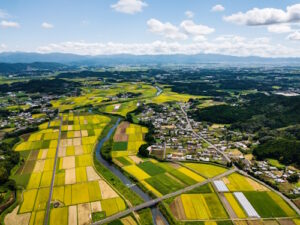
Across many research and policy communities there is growing recognition that today’s challenges are deeply interconnected. Climate change, biodiversity loss, widening inequality, and declining trust in institutions increasingly reinforce one another. This situation is often described as a polycrisis, where environmental, social, and governance pressures overlap and amplify.
In response, some researchers and policy thinkers have begun using the idea of eco-social contracts. These are often described as renewed societal agreements linking environmental care, social justice, and governance, while reconsidering how societies organise relationships between people, economies, and the living world.
Much of this discussion takes place at national or international levels and focuses on the scale of transformation required. At the same time, many of the underlying questions are already familiar to those working in place-based collaborations. Groups working together around rivers, landscapes, and communities regularly find themselves negotiating responsibilities for ecosystems, livelihoods, and future generations.
The point here is straightforward. While eco-social contracts are increasingly discussed in policy settings, many place-based initiatives have long been grappling with related questions in practice. The experience accumulated in these approaches may therefore offer useful insights for those exploring eco-social contracts.
Eco-social contracts as a response to the polycrisis
Recent discussion of eco-social contracts begins from the recognition that existing economic and governance systems have struggled to respond to environmental decline, social inequality, and weakening institutional trust together. In that sense, eco-social contract thinking is a response to the scale and urgency of the polycrisis.
At its heart is the argument that societies need to renegotiate how they relate to the ecological systems that sustain life. This involves making more explicit the responsibilities linking people, institutions, economies, and the living world. It is not simply a matter of improving environmental policy. It is also about reconsidering obligations, fairness, and the terms on which societies organise themselves.
Much of this work takes place within policy and governance discussions, often focused on institutional reform, economic change, and new forms of collective responsibility. Yet these ideas also point toward a wider shift in how societies understand their relationship with the more-than-human world.
Eco-social contracts and relational worldviews
Seen in this light, eco-social contract thinking can also be understood as part of a broader movement away from narrow human-centred and extractive ways of organising society. In that sense, it moves toward a more relational view of how people live within the living world.
That shift is not entirely new. Many Indigenous traditions have long articulated responsibilities between people, land, water, and future generations. In Aotearoa New Zealand, for example, a te ao Māori framing emphasises relationships that extend well beyond the human community. Concepts such as whakapapa and kaitiakitanga express obligations of care between people and the wider living systems they belong to.
These traditions do not rely on the metaphor of a contract. That distinction matters. They begin instead from a relational understanding of the world. Eco-social contract thinking emerges from different intellectual roots within Western political and governance traditions.
Even so, there is a meaningful, if partial, convergence. In different ways, both remind us that nature cannot be treated as separate from social and political life. Recognising these different traditions helps situate eco-social contract thinking within a wider conversation about how societies might organise more responsible relationships between people and planet.
What place-based practice shows
Place-based collaborations provide another perspective on these questions. In long-term initiatives centred on rivers, landscapes, or communities, responsibilities between people, institutions, and ecosystems rarely appear as a single formal agreement.
Instead, they tend to emerge gradually through interaction, negotiation, and reflection. Trust develops through relationships. Legitimacy grows through transparency and accountability. Shared responsibilities take shape through repeated collaboration and learning over time.
In a long-term catchment or landscape initiative, these issues rarely appear as a single discussion about responsibility. They emerge over time as participants work through practical questions about land use, water, livelihoods, governance, and whose knowledge counts. Trust may build slowly, tensions may resurface at transition points, and responsibilities often remain even when a particular programme ends. In settings like this, questions about people, place, and care are not abstract. They are part of the ongoing work.
These kinds of patterns are familiar in long-term collaborative work. Seen in this way, place-based initiatives become spaces where people work through questions about responsibility, care, and fairness in practical terms. The language may differ from that of eco-social contract debates, yet many of the underlying concerns are similar.
Place-based practice therefore becomes important for another reason. It shows how these relational questions are already being worked through in everyday collaboration, even if they appear under different labels and traditions.
Three overlapping ways of working
In long-term place-based work, several strands of practice engage directly with these relational challenges. Three are particularly relevant – social licence, co-design, and evaluation.
Each comes from a different professional tradition and carries its own methods, language and assumptions. They should not be collapsed into a single framework. What is striking, however, is the overlap between them. Each is grappling, in its own way, with how societies negotiate legitimacy, responsibility, and care for shared environments.
Social licence to operate
The idea of a social licence to operate emerged in sectors where formal approval was not enough to secure legitimacy. Communities could still challenge, resist, or withdraw trust from organisations whose actions affected them. Social licence therefore came to refer to the ongoing acceptance and credibility that organisations build through responsible behaviour, transparency, and meaningful engagement.
Over time, discussions of social licence have increasingly incorporated environmental care and questions of justice. Legitimacy now often depends not only on how organisations deal with communities, but also on how they care for ecosystems and respect Indigenous rights and relationships. In that sense, social licence reflects an ongoing negotiation of responsibilities between organisations, societies, and the environments they affect.
The related social licence to operate page explores these questions of legitimacy, trust, and environmental responsibility in more depth.
Co-design
Co-design focuses on how decisions affecting shared environments are shaped. Rather than treating design as a technical task carried out by experts alone, co-design brings different actors and knowledge systems into the process.
In many sustainability initiatives this includes communities, practitioners, researchers, Indigenous groups, and public agencies working together to respond to complex challenges. More recent work in systemic design has expanded this perspective by recognising that environmental and social issues unfold across interconnected systems rather than within isolated projects.
Co-design processes can therefore become spaces where shared responsibilities toward people and the living world are explored and negotiated.
The related Systemic co-design page explores these systems-oriented and participatory approaches in more depth, with links to frameworks, tools, and a companion reflective post on co-design in practice.
Evaluation
Evaluation has also been evolving in ways that resonate with these wider concerns. Traditionally it has often focused on assessing the performance of specific programmes or interventions. In complex settings, however, evaluation increasingly involves supporting reflection about how initiatives interact with wider social and ecological systems.
In place-based contexts this can mean helping organisations and communities pause to consider how decisions affect landscapes, relationships, and future possibilities over time. Evaluation becomes less about judging isolated activities and more about supporting collective learning as situations evolve.
The related Monitoring, evaluation and learning (MEL) page explores these complexity-aware and place-based approaches in more depth, with links to resource hubs and companion posts on evaluation, design, and continuity.
Practical implications
Several practical implications follow from this perspective.
First, many environmental initiatives are not simply technical projects. They are also processes through which relationships between people, institutions, and ecosystems are negotiated over time. Questions of legitimacy, fairness, and responsibility therefore sit at the centre of the work.
Second, social licence, co-design, and evaluation can be understood as complementary parts of a wider learning architecture. This is often the work of facilitators, evaluators, Indigenous leaders, community organisers, researchers, and others helping groups navigate complex decisions over time. In that wider architecture, social licence highlights trust and legitimacy. Co-design supports shared decision-making across different actors and knowledge systems. Evaluation helps groups reflect on how relationships, responsibilities, and outcomes are evolving.
Third, time matters. Many of the challenges associated with the polycrisis unfold over long periods, while programmes and funding cycles are often short. Recognising that places and relationships continue beyond individual projects can help practitioners design work that remains useful after formal mandates end.
Finally, this framing can help practitioners talk about their work differently. What often appears as engagement, facilitation, or evaluation support may also be part of a wider effort to work through how people, institutions, and ecosystems relate to one another over time. Seen in this light, place-based practice is not only about helping a particular initiative function well. It also contributes to broader societal questions about responsibility, care, and how communities live within the limits of the natural world.
Being able to describe that wider contribution may help practitioners connect their experience with policy and governance conversations about eco-social contracts. In that sense, the lessons emerging from place-based work may have value well beyond the initiatives in which they were first developed.
Closing reflection
The purpose of this reflection is not to propose a single new framework. Social licence, co-design, evaluation, eco-social contracts, and Indigenous relational traditions all emerge from different histories and intellectual foundations.
What becomes visible, however, is the overlap between them. Each, in its own way, is grappling with how societies might build more responsible and enduring relationships between people and the living systems that sustain them.
Recognising these connections may help people working in different fields see more clearly what they are already grappling with in practice, and why that matters beyond any single programme or profession.
This post sits alongside earlier reflections on when programmes end but places and relationships continue, and on the overlap between design and evaluation in long-term place-based work.
[* Image: Adobe / TM]
