
People working in climate adaptation and other complex settings do not need convincing that their world is complex. The harder question is how to navigate that complexity in ways that help with real decisions, relationships, and risks, rather than adding another layer of process or reporting. It offers a practitioner’s view of how people navigate complexity in their day-to-day work across programmes and sectors. The seven foundational patterns outlined here offer practical ways to support shared purpose, learning, and adaptive action across multi-actor programmes, partnerships, and governance settings.

Most people working in climate adaptation, catchment management, and other place-based, multi-actor initiatives will recognise the pace, uncertainty, and pressure that complexity brings. Decisions need to be made with imperfect information, relationships span different mandates and timeframes, and external events can reshape priorities with little warning. These realities sit under much of the design, strategy, and evaluation work in these settings.
In this kind of environment, tools only go so far, and no single approach can address everything that is in play. What tends to help is building a set of practical foundational patterns that make it easier for people to work together, hold purpose steady, and make thoughtful adjustments as conditions change. The seven patterns outlined here draw on evaluation, co-design, systems thinking, climate adaptation, and collaborative governance. These ideas also underpin much of my own work, which is why I am drawing them together here in one place.
They are most relevant for people who help design, lead, and support complex work. This includes evaluators, co-design and facilitation practitioners, programme leads, and funders. They are also for people with governance or management responsibilities. Many are looking for approaches that can travel across contexts and remain grounded in how work actually unfolds, including the realities of tight decision cycles, scrutiny, and limited room for error. These ideas also sit alongside current resilience planning, which highlights the importance of relational capability, reflective practice, and adaptive action in the face of ongoing change.
In many adaptation and catchment settings, effective co-design facilitation already weaves together facilitation, strategic planning, and evaluation skills from the start. The same people are helping to frame purpose, shape engagement, and build learning and feedback into the work so it can remain an ongoing, adaptive venture rather than a one-off project. Against that backdrop, seven foundational patterns show up repeatedly in practice.
- Start with shared, revisitable purpose
- Make assumptions and mental models visible
- Work relationally and attend to power
- Build rhythms and habits for reflection
- Look at systems and contexts, not just parts
- Use diverse evidence and knowledges to guide adaptation
- Keep the work open, iterative, and portfolio minded
These seven patterns provide a practical base for design, evaluation, and leadership in complex settings. The following sections explore each pattern in turn and show how this appears in everyday practice.
1. Start with shared, revisitable purpose
Purpose seldom stays fixed in complex settings. Different actors bring their own mandates, histories, and time horizons, and the work is shaped by external events that no one fully controls. In climate adaptation, new risk information can emerge, community priorities can evolve, and political expectations can change quickly. Similar patterns appear across conservation, freshwater, and other place-based initiatives.
Starting with shared purpose is less about locking down a rigid goal hierarchy and more about creating a direction that is strong enough to guide early decisions while still being open to revision. Working intentions often help here. Teams, partnerships, or boards might ask questions such as: What are we trying to protect or improve? For whom? What matters most right now? The aim is not full agreement on every detail, but enough alignment to orient the next steps. Foresight and scenario tools can also help at this early stage, offering structured ways for groups to explore possible futures and clarify what they most want to protect or achieve.For boards, governance groups, and senior managers, this kind of shared, revisitable purpose reduces the risk of constant strategic reversals and helps keep decision cycles anchored in what matters most, even as conditions shift.
For evaluators and MEL practitioners, treating theories of change, outcome maps, and strategy frameworks as hypotheses rather than promises helps keep learning visible. Revisiting purpose periodically supports sensemaking, brings lived realities back into view, and encourages conversations about whose priorities are in play. Purpose becomes something people work with, rather than something they feel compelled to defend.
Establishing this early direction matters. Without at least a shared starting point, people tend to fill the gaps with their own assumptions, which invites misunderstanding and creates unnecessary churn later. Adaptability works best when the group has something clear to return to and adjust together.
2. Make assumptions and mental models visible
Underneath every strategy, evaluation framework, or co-design plan sits a set of assumptions. Some are technical assumptions about causality or behaviour. Others reflect deeper beliefs about risk, success, and whose experience should carry weight. In adaptation and other complex work, these assumptions often influence decisions more strongly than the visible plan.
Making assumptions visible turns them into material that groups can work with. Simple prompts are enough. When mapping a change pathway or reviewing a strategy, questions such as What would need to be true for this to hold? or How are we assuming communities or partners might respond? help surface the underlying premises. Writing these down, rather than leaving them implied, highlights where thinking differs and where evidence is thin.
Mental models also affect what people see as possible. Assumptions about whose knowledge counts, how risk should be shared, or what constitutes credible evidence often sit beneath the surface unless invited into view. Noticing these patterns is part of reflexive practice. For evaluators and those involved in design, building in time to test and refine assumptions as the work progresses allows learning to inform ongoing choices rather than sit alongside the work. These reflective conversations sit at the heart of strategic planning and direction setting, where groups often need to surface assumptions and test early ideas before committing to next steps.
3. Work relationally and attend to power
Climate resilience work depends on relationships. Collaborations are developed across agencies, Indigenous communities, local government, research organisations, civil society, and others working in the same places. These relationships are shaped by trust, history, expectations, resourcing, and the different experiences people bring, including gendered and cultural perspectives. Similar dynamics show up in many other areas, including agriculture, health, and other fields where progress depends on cooperation across knowledge traditions, mandates, and responsibilities.
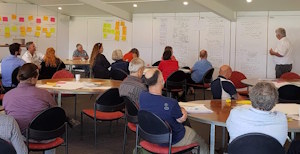
Relational work is often treated as incidental, yet it determines what becomes possible. Trust and a sense of fairness help people surface concerns early, share difficult information, and take risks together. Making partnership expectations clear, supporting the work of convening and brokering, and building time for informal connection all strengthen this part of the work.
Alongside relationships, power dynamics shape what can happen. Questions about who convenes, who decides, whose risks matter most, and whose experience is heard can quietly influence priorities and behaviours. Attending to power does not mean turning every conversation into a critique of authority. It means noticing when people feel unable to speak, when reporting requirements shape what is said, and when the appetite for risk sits unevenly across partners. Evaluators and facilitators can help create space to talk about these patterns in ways that are constructive and respectful. For further resources on building healthy collaborations and navigating shared work across sectors, see the site’s pages on cross-sector partnerships and collaborations and weaving networks.
4. Build rhythms and habits for reflection
Reflection is often treated as something to fit in when time allows. In complex, multi-actor settings it is a core part of the work. Without regular moments to pause, compare expectations with what happened, and understand what is changing, teams tend to repeat familiar patterns, react to short-term signals, or drift away from what matters.
Rhythms help make reflection part of everyday practice. Short after-action reviews, regular learning conversations, and debriefs aligned with project management cycles help teams notice what they are learning and how conditions are shifting. The questions can stay simple: What did we expect? What happened? What surprised us? What does that mean for our next steps? These rhythms sit naturally alongside monitoring and evaluation. When learning moments are connected to the questions people already track, evidence becomes part of how teams steer rather than something added on later.
Mindfulness and related practices can support this reflective capacity. Taking a few quiet moments at the start of a session or encouraging people to notice their own responses more fully, helps surface the emotions and biases that shape decisions. Over time these habits strengthen psychological safety and build cultures where learning feels normal rather than optional.
5. Look at systems and contexts, not just parts
Climate adaptation often reveals how tightly systems are connected. Flood risk, housing decisions, infrastructure, regulatory settings, community capacity, and long-term investment patterns interact in ways that do not fit within a single agency’s remit. These interactions show up just as clearly in health, agriculture, and other place-based work. Looking only at individual components risks missing the wider dynamics in play.
Simple systems thinking tools, such as rich pictures, causal loop sketches, actor maps, and timelines, can help make interactions visible in ways groups can work with. The goal is not a perfect model, but a shared sense of the wider system. Asking questions such as What might others be seeing that we are not? or How might this look from another part of the system? can shift thinking away from narrow problem definitions.
Context shapes what becomes possible. Even well-designed projects struggle if budgeting cycles, accountability regimes, or political expectations reward compliance over adaptation. Naming these constraints helps teams understand where leverage might sit. Small shifts in reporting templates, governance routines, or review processes can make it easier for people to respond to emerging information. Evaluators can add value by mapping these influences and helping connect evidence about system behaviour back to decision-making forums, risk appetite discussions, and governance reviews.
6. Use diverse evidence and knowledges to guide adaptation
In climate adaptation, evidence is less about proving fixed causal links and more about supporting wise choices under uncertainty. No single indicator captures partnership quality, resilience, or policy evolution. Teams often draw on hazard information, policy signals, community narratives, investment patterns, and lived experience to understand how risks and capacities are changing.
This orientation applies in many other settings as well. Evidence gains value through interpretation. Bringing together quantitative trends, qualitative insights, stories, observations, and Indigenous or community knowledge helps build a more complete picture. Decisions improve when people ask: What patterns do we see? What might we be missing? Where are we seeing early signs of opportunity or risk?
It also highlights whose knowledge is included. Treating lived experience and practitioner insight as essential evidence, not as supplementary anecdotes, strengthens both legitimacy and usefulness. Making sense of evidence together encourages teams and governance bodies to move beyond dashboards and towards shared judgement about risk, opportunity, and when to adjust course.
7. Keep the work open, iterative, and portfolio minded
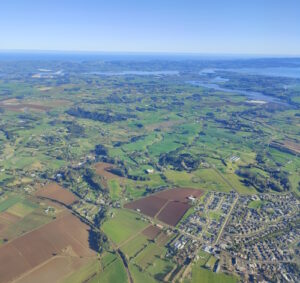
Complex challenges rarely yield to single, linear plans. In climate adaptation, the path from early assessment to long-term resilience involves sequences of experiments, adjustments, and shifts in understanding. Similar dynamics are visible in agriculture, catchment management, and other place-based work. Keeping efforts open to iteration helps teams respond and avoid drift.
Phased strategies with clear learning questions, evaluations designed as navigation aids, and regular decision-making discussions all help teams adjust course in deliberate, timely ways. Portfolio approaches help spread risk by exploring multiple pathways at once, allowing teams to learn how different options perform in different contexts. Monitoring, evaluation and learning (MEL) approaches contribute by helping teams notice which pathways are gaining traction and where adjustments might be needed.
Open does not mean uncertainty for its own sake. It is anchored in purpose, explicit assumptions, and clear decision rights. Iteration becomes a disciplined way of responding to emerging information, rather than a cycle of continual re-starting. This helps leaders avoid repeated U-turns while still adjusting risk exposure and investment over time. This steadiness is often what teams need most when facing volatile and uncertain conditions.
Why these foundational patterns matter now
Climate adaptation sits at the forefront of today’s complexity. The work is fast moving, cross-sectoral, and shaped by uneven impacts and capacities. People with governance and management responsibilities are facing a demanding mix of pressures. Adaptation leads and those working in catchment or landscape management, along with boards, co-governance forums, and senior executives, are being asked to navigate hazards, shifting policies, competing priorities, and tight resources. At the same time they are managing risk appetite, decision cycles, and audit and accountability demands, the routine pressures that sit behind most project work. Many other fields face similar pressures.
In this environment, tools alone are not enough. The seven foundational patterns outlined here do not replace existing methods, they give those methods a place to stand. They help connect evaluation, systems thinking, co-design, governance, and social learning in ways that support real discussions and practical decisions, without adding unnecessary layers of process or reporting. For evaluators, they point to a role that is less about compliance and more about helping teams and governance bodies see patterns, surface blind spots, and make timely, defensible decisions. For programme teams and leaders, they offer ways of working that sit naturally alongside day-to-day activity.
Most importantly, these foundational patterns are accessible. They do not require anyone to become a specialist in complexity. They do ask people to become more deliberate about their purpose, assumptions, relationships, reflection, systems, evidence, and iteration. Over time, these patterns can help institutions respond more steadily to uncertainty without losing sight of what matters. A companion reflection piece looks at what these patterns mean in long-term, place-based programmes.
If you would like to explore these themes further, the site’s hub on complexity-aware practice brings together core ideas, tools, and examples that sit alongside the patterns described here. Several related areas offer practical entry points for applying this work, including strategic planning and direction setting, Theory of Change, systems thinking, and cross-sector partnerships. Each offers different ways to support shared purpose, surface assumptions, strengthen relationships, and keep learning visible as conditions evolve.
If these patterns resonate with your own work and you would find it useful to explore how they might apply in your setting, feel free to get in touch. I support practitioners and teams looking to navigate complex settings in grounded, practical ways.
