
Climate adaptation is not only about preparing for impacts. It is also about learning how to act as risks, places and circumstances continue to change.
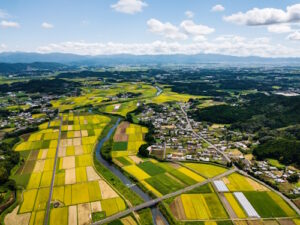
Adaptation takes place in conditions that are uncertain, uneven and continually changing. Plans and frameworks matter, but so do the ways people interpret change, learn from experience, work across different perspectives and adjust what they are doing as new conditions emerge.
These essays bring together reflections on climate adaptation, resilience, monitoring and evaluation, indicators and judgement, place-based action, collaboration, futures thinking and learning under uncertainty. Some focus directly on adaptation, while others draw on wider work in systems thinking, complexity and collaborative practice that has particular relevance for adaptation.
Together, they explore what helps people and organisations move beyond reporting activity towards understanding whether adaptation is reducing risk, strengthening resilience and supporting better decisions over time. The focus is less on prescribing a particular framework than on the learning, relationships and judgement needed to make adaptation work in practice. The essays can be read individually or followed as a developing series.
Essays in the collection
Adaptation under uncertainty: reflections on climate change overshoot and resilience
Sets the wider context for the collection. It reflects on what adaptation means when climate and other conditions continue to change, drawing on resilience, systems thinking and collective learning to explore how people and institutions can remain responsive rather than assuming a return to earlier conditions.
Monitoring, evaluation and learning for climate adaptation: practical guidance for practitioners and policy leads
Looks at monitoring, evaluation and learning as part of adaptation practice rather than simply as a reporting requirement. It considers how learning systems can help people notice change, review assumptions and adjust actions as risks and circumstances evolve.
Indicators, judgement, and adaptation: making sense of change in complex settings
Explores why indicators do not speak for themselves. It looks at the role of interpretation, judgement and discussion in understanding what evidence means, particularly where outcomes are complex, contested or difficult to capture through simple measures.
How will we know if climate adaptation is working?
Uses recent New Zealand and international adaptation guidance to examine a basic monitoring challenge: intended outcomes need to be clear before useful indicators and other evidence can be developed. It also considers how national monitoring can connect with learning and decision-making in particular places.
Working together in a polycrisis
Broadens the discussion from monitoring to the collaborative conditions needed for adaptation and other forms of system change. It reflects on why relationships, coordination and shared learning become more important when pressures are interconnected and no single organisation can respond effectively on its own.
Working well in complexity: seven foundational patterns
Sets out recurring patterns for working in settings where outcomes cannot be fully predicted or controlled. The essay has particular relevance for adaptation, where people need enough structure to act while remaining able to learn, respond and revise their approach as conditions change.
Rethinking scaling in complex settings: reflections from practice
Questions the assumption that successful approaches can simply be replicated elsewhere. It considers scaling as a process of adaptation and translation, with attention to context, relationships, local interpretation and the conditions that allow useful ideas to travel between places.
Exploring futures in practice
Looks at futures thinking as a practical way of working with uncertainty rather than trying to predict a single future. It considers how scenarios, foresight and shared exploration can help groups examine assumptions, widen their options and make decisions that remain useful across changing conditions.
One future, many pathways
Reflects on how change unfolds through different pathways across places, organisations and communities. It emphasises experimentation, learning and the possibility of moving towards shared purposes without assuming that everyone will follow the same route.
These essays form one part of the Learning for Sustainability resources on climate adaptation. The accompanying Climate adaptation: frameworks, practice, and learning hub brings together practical guidance, frameworks and curated resources alongside the essay collection.
[* Image: Adobe / TM]