
In complex settings, effective collaboration depends on more than information-sharing — it requires building shared understanding and creating the conditions for collective learning. This post explores how social learning strengthens collaboration by fostering dialogue, reflection, and adaptation across diverse perspectives.
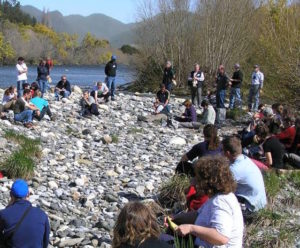
Social learning is an approach well-suited to addressing complex environmental and social challenges characterised by uncertainty, multiple stakeholders, and diverse views on causes, impacts, and desired outcomes. At its core, social learning involves pausing to engage in meaningful dialogue, enabling stakeholders from various backgrounds to understand each other’s perspectives more deeply. Drawing together insights from previous posts over the past year, this article emphasises how dialogue facilitates collective action. It highlights the importance of ongoing reflection and iterative adaptation in addressing complexity.
The direction of my work and the Learning for Sustainability site over the past 20 years has emerged from a recognition that social learning is more than just information-sharing; it’s fundamentally about creating the conditions for long-term, collaborative problem-solving. While workshops, reports, and networks contribute, social learning achieves greater effectiveness when embedded within ongoing decision-making and adaptive processes. This insight has guided the site’s development from its inception, emphasising an integrative approach to complex challenges—whether environmental, social, economic, or related to health and well-being.
As highlighted in a recent post on systems thinking and systemic design, complex issues like climate change, biodiversity loss, public health emergencies, and social inequality require responses that consider interactions and interdependencies. Social learning complements systemic approaches by creating spaces where people collaboratively explore these complexities, identify leverage points, and co-create solutions.
Why social learning matters now
We live in what is increasingly recognised as a “polycrisis” era, where multiple crises (such as climate change, biodiversity decline, public health emergencies, and economic inequalities) intertwine and amplify each other. Unlike isolated crises, a polycrisis involves complex entanglements—such as how water scarcity triggered by climate change can intensify food insecurity and exacerbate health issues. As discussed in the post on breaking silos and the IPBES Nexus Report, these interconnected challenges demand approaches that foster transdisciplinary collaboration and continuous co-learning rather than siloed, static policies.

Integrating diverse knowledge systems—including scientific, Indigenous, local, and experiential perspectives—is increasingly recognised as essential to meaningful action. As outlined previously in reflections on participatory action research and co-design and facilitation, inclusive dialogue is key to sustainability transitions, climate adaptation, biodiversity conservation, and even responsible governance of technologies like artificial intelligence (AI).
The following examples illustrate how integrating diverse knowledge systems through social learning can lead to more effective outcomes in different contexts:
- Biodiversity conservation: Initiatives that integrate traditional ecological knowledge often produce more effective and culturally appropriate outcomes. An example is Indigenous Australian communities’ use of “cultural burning” techniques to manage vegetation and reduce wildfire risks, demonstrating the power of inclusive approaches.
- Responsible AI governance and public health: Addressing ethical implications of AI governance requires participatory methods. Social learning frameworks help ensure algorithmic systems reflect shared societal values rather than amplify existing biases or inequalities. Similarly, public health, particularly in the wake of COVID-19, has highlighted the need for improved learning systems across human, animal, and environmental health sectors. Social learning can play a critical role in integrating scientific, policy, and community knowledge into pandemic preparedness and response.
Key components of social learning
Social learning is inherently complex and integrates multiple interrelated components to foster meaningful collaboration and problem-solving. While each component individually contributes to learning processes, their integration genuinely characterises effective social learning initiatives. It’s important to recognise that social learning goes beyond applying individual elements in isolation—true effectiveness comes from creating synergy between these strands. One helpful way to understand social learning, as highlighted on the top menu bar (above) for social learning, is through the following key components:
- Systems Thinking: Understanding challenges holistically by considering multiple perspectives, recognising feedback loops, and pinpointing leverage points within complex systems. Systems thinking enables stakeholders to identify interactions, interdependencies, and opportunities for sustainable improvements.
- Network Building: Developing strong relationships and trust across disciplines, sectors, and communities is crucial. Network building supports the flow of information, ideas, and resources, fostering collective ownership and collaborative problem-solving.
- Dialogue: Genuine dialogue involves creating inclusive, reflective, open, and sometimes challenging conversational spaces. It helps participants uncover assumptions, fosters mutual understanding, and supports collective decision-making and action.
- Knowledge Management: Integrating diverse forms of knowledge—scientific, local, traditional, experiential—into decision-making processes. Effective knowledge management synthesises insights from various stakeholders, ensuring solutions are contextually relevant and broadly informed.
- Reflective Practice: Embedding continuous learning and adaptation into processes and institutions. Reflective practice involves regularly evaluating actions and outcomes, critically assessing underlying assumptions, and systematically incorporating lessons learned into future actions.
These components interact dynamically, forming learning ecosystems where stakeholders can collaboratively experiment, adapt, and drive sustained change. While various initiatives might emphasise certain aspects more than others, recognising and actively cultivating all these elements enhances the depth, effectiveness, and longevity of social learning efforts.
Where social learning is making an impact
Social learning has proven effective in several key areas, including climate adaptation, biodiversity governance, and managing new and emerging technologies. In climate adaptation, for instance, social learning enables communities to develop more resilient strategies by integrating scientific knowledge with local insights. A coastal community might use scenario planning to anticipate and prepare for sea-level rise, combining scientific projections with local insights on historical flood patterns. This collaborative approach ensures that adaptation strategies reflect diverse needs and knowledge, enhancing their effectiveness and sustainability.
In biodiversity conservation, collaborative approaches involving multiple stakeholders ensure that strategies are equitable, culturally informed, and locally relevant. Many community-engaged conservation initiatives across the globe demonstrate how traditional knowledge and scientific methods together support sustainable outcomes within place-based initiatives. These initiatives highlight the importance of inclusive dialogue and co-learning in achieving more effective and sustainable conservation practices.
Social learning also enhances governance around emerging technologies. For example, in Europe community input has played a significant role in shaping ethical guidelines for responsible AI development that look to align with societal values and avoid perpetuating biases or inequalities. Similarly, in public health, social learning was instrumental during the COVID-19 pandemic, where many successful initiatives involved multi-sector dialogue integrating scientific knowledge, local community insights, and policy expertise. These efforts allowed for swift adjustments in responses and improvements in public trust.
Importantly, these examples highlight the underlying importance of robust collaboration and facilitation, rather than relying solely on labels such as co-design, adaptive management, Transformative Innovation Policy, or agile methodologies. The true measure of success in all these approaches comes from their practical implementation across a small number of common areas—engaging stakeholders genuinely, managing complex power dynamics, and embedding iterative learning throughout decision-making processes.
Moving forward
Social learning offers powerful approaches to address complex issues, but it’s not universally suited to every challenge. The potential of social learning depends heavily on recognising its inherently place-based and scale-responsive nature, meaning it can operate effectively at local, regional, national, or international scales. Its success also depends on context, participant readiness, and the complexity of the issues involved.
To practically enhance social learning’s impact, stakeholders, leaders and practitioners across various roles can:
- Reflect and adapt their roles: Foster dialogue and reflective practices within their work or community contexts, creating inclusive spaces for collaborative reflection and learning.
- Advocate for appropriate use: Support policies and practices that emphasise participatory governance and iterative learning, while recognising when alternative approaches might be better suited to the context.
- Develop effective cross-sector facilitation: Actively integrate diverse forms of knowledge, bridge disciplinary divides, and support collaboration across sectors to achieve practical, context-specific outcomes.
- Build and maintain an ethic of adaptive management: Encourage continuous reflection, evaluation, and adaptation within institutions, creating sustained opportunities for participants to collectively refine approaches over time.
- Embed ongoing learning and evaluation: Create systems and processes that enable continuous adaptation, ensuring social learning remains dynamic and responsive to evolving conditions and insights.
By approaching social learning thoughtfully and recognising the importance of the skills and context involved, we can better support genuine learning ecosystems that drive sustained change and build resilience in addressing complex global challenges.
To explore social learning further, visit the Social learning resource page, which offers guidance, methods, and frameworks for embedding social learning within your initiatives. Additional useful resources include the pages on Systemic co-design and Facilitation tools and techniques. Other closely related sections include: Planning, monitoring and evaluation, Team building, communities of practice (COPs) and learning groups and Cross-sector partnerships and collaborations.
[* Image credit: World Vision/DFID – UK Department for International Development]

2 Responses
Very thoughtfully and succinctly put. I’ll be getting my students to read your blog and look at your site. Carol Mutch (University of Auckland).
Thanks, Carol. That’s much appreciated—glad it might be of use to your students.